



Cuts and Wounds
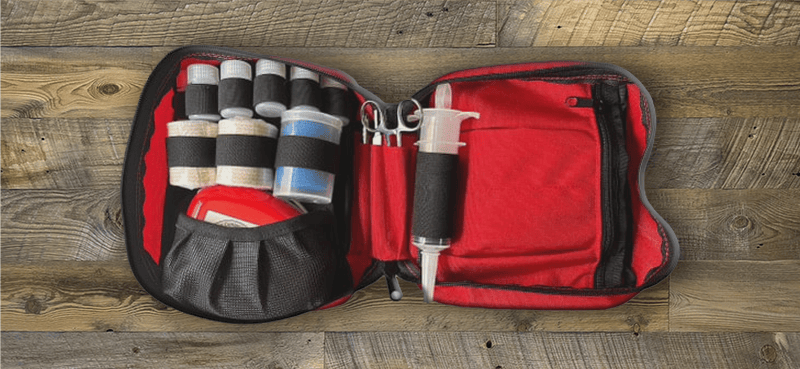
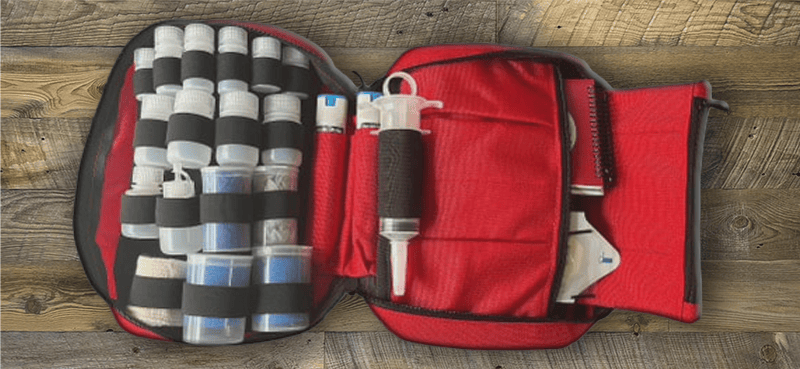
- I like cleaning a wound with a syringe; it's easier to use and generally more effective than cutting a corner off a plastic bag. The size of syringe depends on individual preferences and is somewhat dictated by the type of pack you choose to carry. Typically larger syringes are easier to use because of their greater volume (and don't fit into our Minimalist Pack); as their size increases so does their weight. Before flushing the wound, remember to wash the surrounding skin with soap and water or water followed by a povidone-iodine solution to help prevent harmful bacteria from migrating into the wound. A pair of tweezers or forceps can be handy to remove small stones and visible debris as well as cactus spines and splinters.
- roller gauze, a small bottle of Tincture of Benzoin, white petroleum jelly (Vaseline®) or a petroleum-based antibiotic ointment (Triple Antibiotic Ointment®, Neosporin®, etc.), and flexible medical tape to dress and bandage simple wounds rather than carry an assortment of band-aids (unless I'm on a short trip with young kids, then Dora and Star Wars band-aids have their uses). Neither do I carry individually wrapped gauze pads; instead, I cut what I need from a two-inch gauze roll. After you have cleaned the thoroughly cleaned the wound, paint the skin around it with two coats of Tincture of Benzoin to help the tape stick. Then cut and impregnate a few layers (about a quarter of an inch) with the petroleum jelly or ointment for the dressing and place it over the wound to help protect the wound and promote healing. The Tincture of Benzoin should extend roughly 3/4 of an inch past the edges of the gauze on all four sides. Finally, cut enough flexible medical tape to cover the dressing and Benzoin. Monitor for the signs and symptoms of a local infection: increased redness, tenderness, pain at the site. For clean, shallow wounds, you can leave the dressing in place for up to two days; deeper wounds require more frequent changes.
- For clean shallow cuts, especially to the face, I carry and use steri-strips to close the wound to decrease scaring and promote healing. Never close a deep or excessively dirty wound in the field. Use Tincture of Benzoin to help the strips adhere. To use: approximate the wound edges—avoid overlapping—place the steri-strips about 1/8 of an inch apart.
- If I'm in a wet environment—a place where it rains a lot or I'm paddling—I carry and use a micro-thin film dressing. Micro-thin film dressings are clear, water-proof, and breathable. You can put them directly over a wound, over steri-strips, or over a dressing and ointment.
Blisters
Blisters are the bane of hikers and sportsmen and women everywhere. Fortunately, with a little attention, they are relatively easy to prevent and treat. The BEST prevention, by far, is ENGO Blister Patches. ENGO patches adhere to your footwear, NOT your foot and will last for weeks before needing replacement. If you regularly get blisters in a specific spot, put a ENGO patch on your hiking boot under that spot and PRESTO, no more blisters. No kidding. If you get a hot spot, stop and apply an ENGO patch to your boot and you won't get a blister.
If you get a hot spot and fail to treat it, you will likely get a blister. The simplest solution at this point is to drain the blister, drain it (or remove the lid) and cover it with a hydro-gel dressing.
Life-threatening Allergic Reactions
Life-threatening allergic reactions, also know as anaphylaxis, are unpredictable and, while rare, can quickly lead to death. Bee, wasp, fire ant, hornet, and other types of stings are common causes, as are food and drug allergies. The ONLY treatment is an intramuscular shot of epinephrine; epinephrine reverses the signs and symptoms. Administer an oral antihistamine if you treat someone with epinephrine.
General Aches and Pains
Most general aches and pains from muscle soreness to headaches can be treated with ibuprofen or naproxen, which ever you prefer. Both are over-the-counter medications available from most grocery and drug stores.
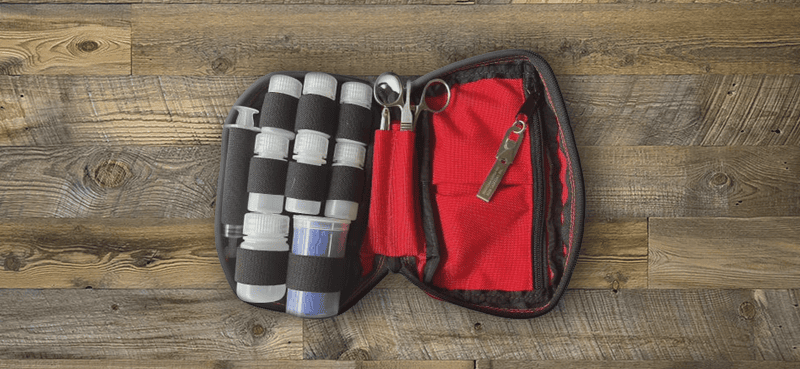
In summary, at the very least you should consider carrying a basic wilderness first aid kit to treat the problems listed above. If this is all you carry, you can fit everything listed above (except where noted) into our Minimalist First Aid Pack. If you want to carry more medications and supplies, consider our Guide First Aid Pack or Expedition First Aid Pack.