


Concepts to consider:
Critical Roles of a First Aid Kit
- A good first aid kit will protect the contents from damage. You want the items in your first aid kit to be in excellent condition when you need them.
- A good first aid kit will allow you to organize the contents so they can be easily found. A first aid kit that vomits its contents everywhere when you open it or one where you can't find what you need quickly, is essentially useless.
- A good first aid kit will clearly identify itself as a first aid kit. When you ask a group member, fellow guide, or bystander to go to ____________ and get the first aid kit, it needs to easily identifiable. Remember to show everyone what the kit looks like and where it is kept before you start the trip.
Size & weight
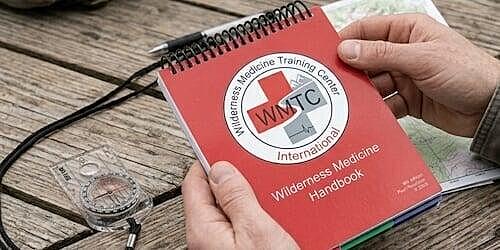
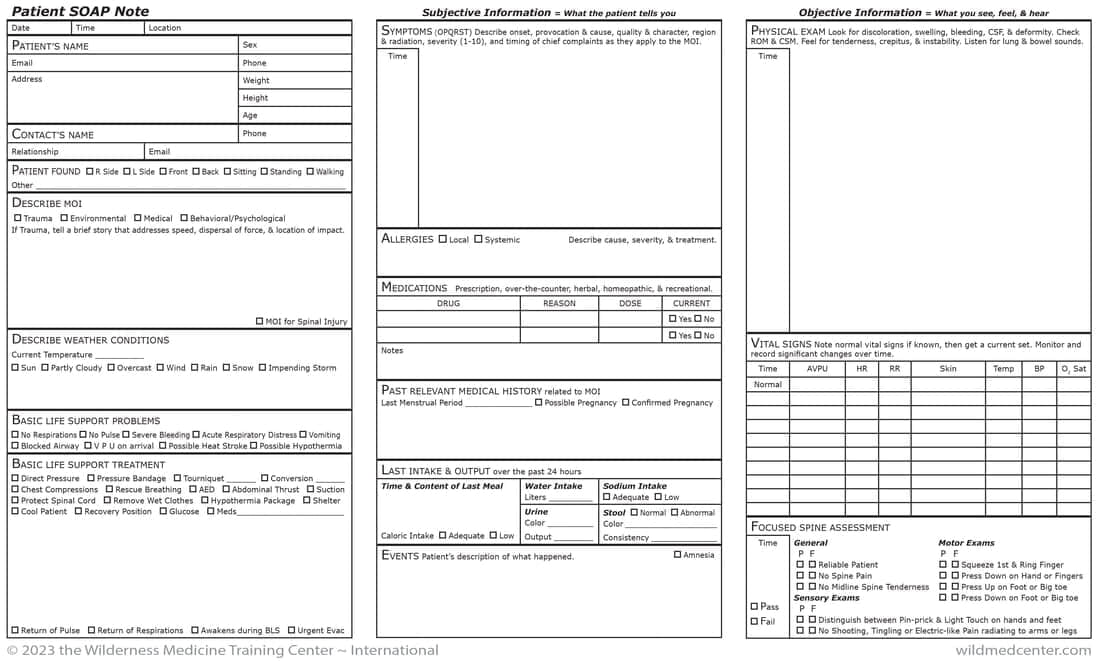
The type of activity or expedition defines the amount of weight and space available for your kit (e.g.: a sailboat can carry more than a raft and a raft can carry more than a climber etc.). Generally the further you are from “help,” the bigger your first aid kit will be; consider resupply(s). The level of training of the medical “officer” will limit how much invasive equipment or Rx drugs you can carry and influence the size and weight of your kit. Have each expedition or team member complete a thorough medical form; you may need to add special equipment or drugs to your kit. Pay attention to any allergies. If your experience in wilderness medicine is limited, consider carrying our Wilderness Medicine Handbook for a concise field reference and Patient SOAP Notes to thoroughly document your assessment and treatment.
Expedition vs. Search and Rescue kits
- hope that they will NOT use their first aid kits. That said and adhere to the principles of improvisation: they limit specialized items, focus on multipurpose equipment, and adapt expedition gear for medical uses (splints or litters). As your ability to improvise increases, the size of your expedition first aid kit decreases.
- Rescue teams know they WILL use their equipment and often carry specialized gear with them rather than scavenging their personal gear for improvisation.
Packaging
- Use different compartments or packs. DO NOT use plastic bags as pack or compartment substitutes.
- If the kit will be used by different people, clearly label each compartment or pack: In many expeditions each expedition member carries their own personal care kit (blisters, sun screen, OTC meds, personal Rx meds, minor cuts & scrapes, etc.) leaving the expedition first aid kit for emergencies and minor trauma (more serious wounds and unstable injuries). This helps ensure that the expedition first aid kit is complete when it is needed.
- Make and laminate a contents list for each pack that indicates the location and intended use for each item, including all medications.
- Consider sealing soft goods in plastic to protect them from moisture. Use individual mini zip-locks or “Seal-a-Meal” freezer type packages. Even if the kit is carried in a dry bag, the contents will be exposed to the elements once removed.
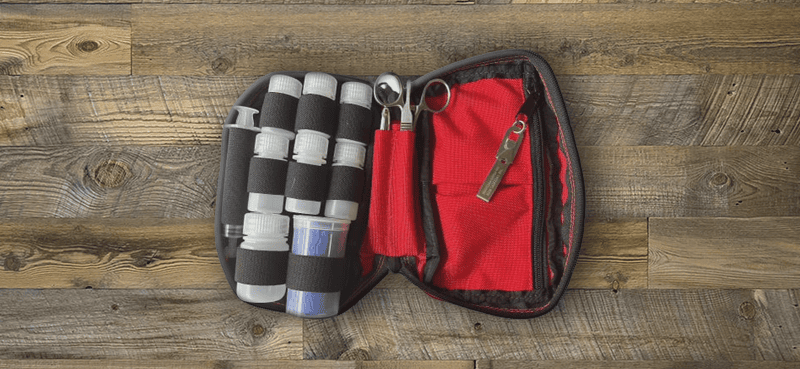
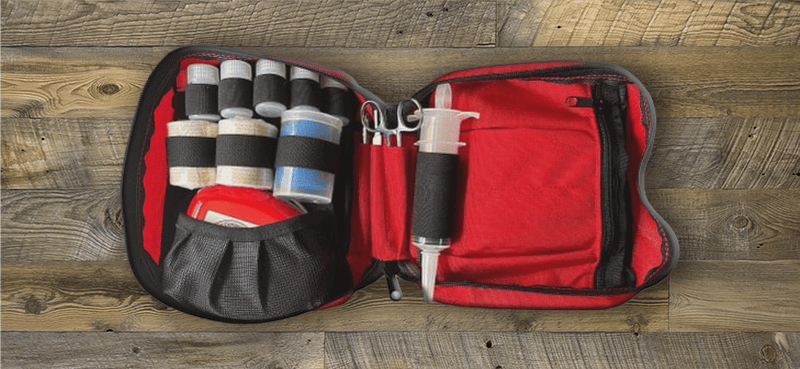
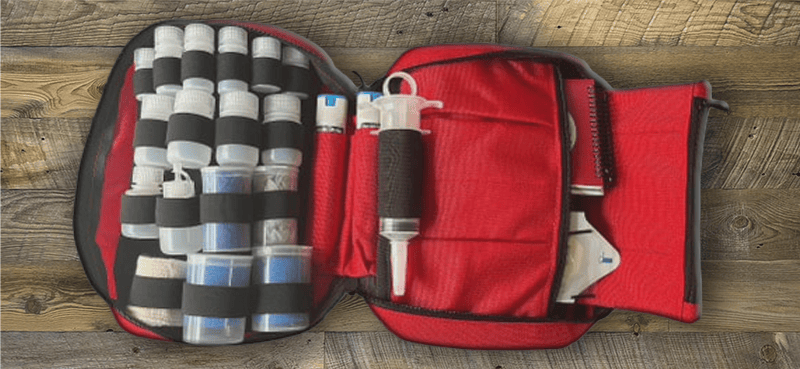
- Tubes break. Repackage ointments into 0.25 oz, 0.5 oz, and 1.0 oz—or larger depending on group size— narrow and wide mouth Nalgene® bottles.
- Liquids leak. Package liquids in 0.5 oz, 1.0 oz, or 2.0 oz narrow mouth Nalgene® bottles.
- Oral drugs: Capsules melt in hot weather and tend to stick together if carried in a Nalgene container; tablets or caplets store well in all temperatures. Blister packs offer good protection in the short term (± week), are difficult to organize in a field pack, contribute to micro-trash, and take up significantly more space than Nalgene bottles. Limit blister packs to disintegrating tablets. Nalgene containers are waterproof, extremely tough, easy to organize, and easily labeled; use them to carry the majority of your oral medications.
- Limit injectable drugs as most are susceptible to temperature changes. Carry close to your body core in extreme cold to prevent freezing.
- Use a weatherproof drug log for ALL medications so that you know who is using them and why. The log should include space for the patient’s name, drug name, administration route, dose, time, and reason/diagnosis.
Training
Train your expedition or team members to use your kit. Until they are trained only you know why you assembled the kit as you did. Without specific training most people will not know how to use the equipment you have so thoughtfully assembled. Restrict access to compartments or packs that members are not trained to use. In order to understand and responsibly use the first aid supplies discussed in parts 2, 3, and 4 of this article series I recommend, at minimum, taking our Wilderness First Aid course—guides and outdoor instructors should take our Wilderness First Responder course—and carry our field manual.
Compile a Possible Problem List
For trip leaders, the decision of what to carry in a first aid kit—or if you should carry a first aid kit at all—is based on your ability to recognize and assess the hazards you are likely to encounter during your trip, your ability to mitigate them without injury, your ability to predict the type and severity of your injuries if you can't, and your ability to purchase and carry the supplies you need to treat those injuries. Conceptually, the first step to assembling a first aid kit is to come up with a comprehensive, but realistic, possible problem list. Each outdoor pursuit—be it rock climbing, skiing, mountain biking, paddling, etc.—has a short list of traumatic injuries that are inherent to that activity. So too, does the environment. And, there may be infectious diseases endemic to the area you plan to go. Base your list on the injuries and illnesses inherent to the outdoor activity, environment, and location of your trip. For clarity: divide the list into Basic Life Support or Major Trauma, Minor Trauma, Environmental, and Medical problems and prioritize them. Once you are satisfied with your possible problem list, compile a list of first aid supplies needed to treat them; carry more of the stuff that you WILL need.
If you were going to spend an afternoon hiking cross country and, given the terrain and undergrowth there was a good chance that your path would take you through brambles, you might choose to carry some supplies to treat superficial and full-thickness wounds in case your sleeve or pant leg pulled up as you pushed through the thorns. If you knew you there was a chance you might disturb a nest of yellow jackets and you knew enough about medicine to know that life-threatening allergic reactions are unpredictable, you would carry epinephrine and an oral antihistamine. If you are prone to blisters or have any health issues, you would adjust your route and/or what you carry in your first aid kit, accordingly. If your trip were going on a multi-day or -week trip, you should probably consider—and take supplies to treat—minor medical problems like headaches, diarrhea, urinary tract infections, etc.
If you were a member of a local Search & Rescue "Hasty" team that responded to climbing accidents at a local climbing area, you would likely carry materials to treat musculoskeletal injuries, have rapid access to a litter and more people, and have reliable emergency communication and transportation.
Parts 2, 3, and 4 of this series make recommendations for a number of wilderness first aid kits based on real-life needs for most wilderness travelers and include packs we designed specifically for that purpose (see photos) and supplies we sell. Each of our packs can be configured in a variety of ways to accommodate individual needs. In remote areas where urgent evacuation is difficult or simply not possible, you may need additional assessment and treatment supplies. Within the United States a physician consultation and prescription is required for all Rx drugs; while you are there, discuss the over-the-counter (OTC ) drugs you plan to carry and follow-up with a pharmacist to make sure you understand each drug: its administration, side effects, and drug interactions.
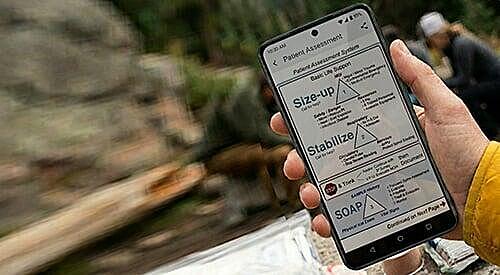
Looking for a reliable field reference? Consider consider purchasing one of our print or digital handbooks; our digital handbook apps are available in English, Spanish, and Japanese. Updates are free for life. A digital SOAP note app is also available.